
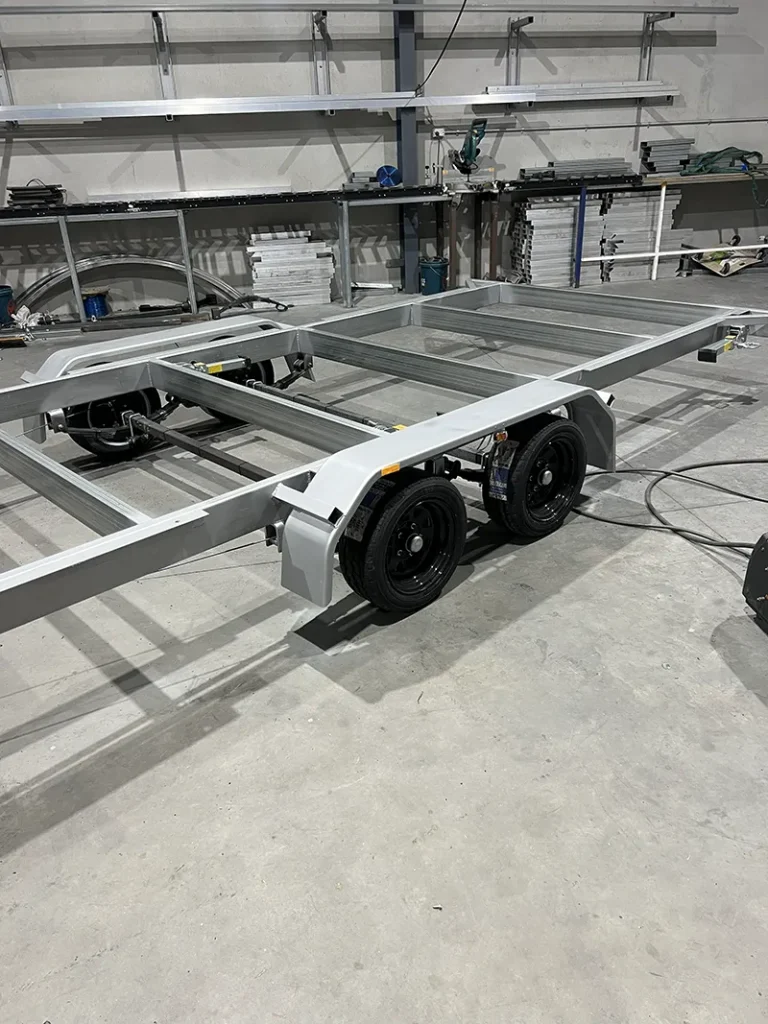
The tiny home movement has well and truly taken off across Australia, and the Central Coast is no exception. Whether it’s a backyard granny flat, a rental investment, a sea change on a rural block or a mobile home built for the open road, more people are exploring tiny homes as a practical, affordable and flexible way to live.
But here’s the thing most people don’t think about early enough: the chassis. Choosing a Tiny Home Trailers on the Central Coast is one of the biggest decisions in the entire build, and getting it wrong can lead to structural cracking, uneven floors, poor towing performance and compliance headaches. It’s easy to get excited about floor plans and interior fit-outs, but without the right base underneath, even the most beautiful tiny home can run into serious problems.
So if you’re in the early stages of planning a tiny home build, this one’s for you. Here’s what to look for when choosing a Tiny Home Trailers on the Central Coast, and why getting it right from the start saves a lot of pain down the track.
Start with the Size and Weight of Your Build
This sounds obvious, but it’s where a lot of people get it wrong. The chassis needs to support the full finished weight of the home, not just the frame and cladding, but everything. Cabinetry, appliances, water tanks, bathroom fittings, furniture, personal belongings; it all adds up faster than most people expect.
Before settling on a chassis size, it’s worth sitting down with your builder or designer and getting a realistic estimate of the total finished weight. From there, the chassis can be spec’d with the right Gross Vehicle Mass (GVM) rating to carry that load safely, with a margin built in for peace of mind.
On the Central Coast, common Tiny Home Trailers sizes range from 4.8 metres through to 7.2 metres, with dual or tri-axle configurations depending on the length and weight of the build.
Steel or Aluminium? Picking the Right Material
This is one of the most common questions that comes up, and there’s no single right answer. It depends on the project.
Steel is strong, cost-effective and widely used for Tiny Home Trailers across Australia. It handles heavy loads well and is relatively straightforward to fabricate and repair. The trade-off is that it’s heavier, which affects tow weight and fuel consumption.
Aluminium is lighter, which means a lower tare weight and more payload capacity for the home itself. It also resists corrosion better than steel, making it a smart choice for coastal environments like the Central Coast where salt air can take its toll over time. The downside is that aluminium typically costs more upfront.
A good fabricator will walk you through both options and recommend the best fit based on your build size, how often the home will move, your tow vehicle and your budget.
Compliance and Road Registration Matter
A Tiny Home Trailers isn’t just a structural platform. If the home is ever going to be transported on public roads, the chassis needs to be fully road legal. That means properly rated axles, electric brakes, a safety breakaway system, LED tail lights, number plate lighting and a compliant coupling.
It also means the chassis needs to be registered. This is something that’s easy to overlook in the planning stage, but getting caught with an unregistered or non-compliant chassis can lead to fines, insurance issues and delays.
If you’re building on the Central Coast, it’s worth working with a local fabricator who understands the registration and compliance requirements in NSW and can deliver a chassis that’s ready to go from day one.
Flat Floor or Wheel Arch? Understanding the Layout Options
There are generally two approaches to Tiny Home Trailers design: flat floor and wheel arch.
A flat floor chassis sits the entire deck above the wheel line, giving you a completely level surface to build on. This makes interior fit-out simpler and gives full flexibility with floor plan layouts. The trade-off is a slightly higher overall height, which may matter if transport routes include low bridges or height-restricted areas.
A wheel arch chassis drops the frame lower between the axles, with raised sections over the wheels. This gives a lower overall height and centre of gravity, which can improve road handling. The downside is that the wheel arches intrude into the interior space, which needs to be designed around during the fit-out.
Both options work well. The right choice comes down to the specific home design, transport requirements and personal preference.
Choosing a Tiny Home Trailers on the Central Coast? Go Custom
It can be tempting to save money by buying a generic rolling chassis and building on top of it. And for some very basic builds, that might be fine. But for anything with a proper fit-out, custom is almost always the better option.
A custom chassis is designed around the exact dimensions, weight and layout of the home. That means the crossmember spacing, tie-down points, plumbing and electrical pass-throughs, and axle positioning are all placed exactly where they need to be. It also means the GVM rating is matched specifically to the build rather than relying on a generic estimate.
On the Central Coast, DKW Trailers builds custom Tiny Home Trailers from the ground up, tailored to each client’s project. With over 15 years of hands-on fabrication experience and a family background in trailer and chassis builds, the team understands the detail that goes into getting a chassis right.
Get It Right from the Start
The chassis is the single most important structural element of any tiny home. It carries the weight, handles the road, and provides the foundation that everything else is built on. Cutting corners at this stage creates problems that are expensive and difficult to fix later.
If you’re planning a tiny home build on the Central Coast and want to make sure the chassis is done properly, get in touch with the DKW team for a chat. Dale can talk you through your options, help you work out the right size and spec, and provide a clear quote with no surprises.