
Walk through any hardware car park on the Central Coast and you’ll see the same handful of off-the-shelf trailers over and over again. Same size deck, same tie-down layout, same basic setup. They do the job in a general sense, but ask any tradie who uses one daily and they’ll usually have a list of things they wish were different.
The deck is too short. The tie-down points are in the wrong spot. There’s no room for the toolboxes. It doesn’t sit right behind the ute. Sound familiar?
That’s exactly why more tradies, builders and commercial operators are investing in custom built trailers on the Central Coast. Not because they want something fancy, but because they want something that actually works the way they need it to.
The Problem with Off-the-Shelf Trailers
There’s nothing wrong with a mass-produced trailer if it happens to suit your needs. The trouble is, most of them are built for a broad market rather than a specific use case. The manufacturer doesn’t know what you’re carrying, how often you’re loading and unloading, where you’re driving, or what vehicle you’re towing with.
So you end up with compromises. The deck might be the right length but too narrow. The axle rating might be fine for an empty run but borderline with a full load. The tie-down points work for some gear but not others. Over time, those small compromises add up, and they usually show up as damaged gear, wasted time, or a trailer that wears out faster than it should.
For someone who uses their trailer once a month to move a few things around, that’s probably acceptable. But for a tradie or operator who relies on their trailer every single day, those compromises cost real time and real money.
What Makes Custom Built Trailers on the Central Coast Worth It
A custom built trailer starts with a blank sheet and a simple question: what does this trailer need to do? From there, every element of the build is designed around the answer.
Need a 4.8 metre flat bed with heavy-duty rated axles and recessed tie-down points for machinery? Done. Want a 3 metre aluminium trailer that’s light enough to tow behind a smaller ute but strong enough to handle a full load of landscaping materials? No problem. Need custom toolbox mounts welded into the chassis so nothing shifts during transit? Easy.
That’s the difference. Everything has a purpose, everything has a place, and the trailer works with you rather than against you. There’s no modifying, no workarounds and no bolting things on after the fact to make up for a design that wasn’t quite right.
Steel or Aluminium? Choosing the Right Material for Your Trade
Material choice is a big part of the custom trailer conversation, and the right answer depends entirely on how the trailer will be used.
Steel is the go-to for heavy-duty applications. It’s strong, cost-effective and handles serious loads without flexing. For builders, concreters and anyone regularly hauling heavy equipment or materials, a steel trailer is usually the practical choice.
Aluminium is lighter, which means less strain on the tow vehicle and better fuel economy over time. It also handles moisture and salt air better than steel, which is a real consideration for anyone working in coastal areas on the Central Coast. For trades like landscaping, electrical or general maintenance where the loads are lighter but the trailer is used constantly, aluminium often makes more sense.
A good fabricator won’t push one material over the other. They’ll listen to how the trailer will be used and recommend the option that delivers the best balance of strength, weight and longevity for that specific application.
Built to Handle the Central Coast
The Central Coast isn’t all smooth highway. Between gravel access roads, construction sites, bush blocks and the odd trip up a muddy driveway, trailers cop a fair beating around here. Add in the coastal salt air and seasonal humidity, and cheap materials and weak welds don’t last long.
Custom built trailers from a local fabricator are designed with these conditions in mind. The steel is properly treated, the welds are structural grade, and the components are rated for the actual loads and terrain the trailer will face. It’s the difference between a trailer that looks good for six months and one that’s still going strong after six years.
The Real Cost Comparison
One of the main reasons people go off-the-shelf is price. And yes, a mass-produced trailer will almost always be cheaper upfront. But upfront cost doesn’t tell the full story.
A custom built trailer that’s properly matched to the job lasts longer, requires less maintenance and doesn’t need expensive modifications down the track. There’s no replacing undersized axles twelve months in, no welding on extra tie-down points, and no swapping out a deck that turned out to be the wrong size.
When you factor in the lifespan and the daily usability, a custom built trailer from a fabricator like DKW often works out better value in the long run. It’s an investment in a tool that pays for itself over years of reliable, purpose-built performance.
Custom Built Trailers from DKW on the Central Coast
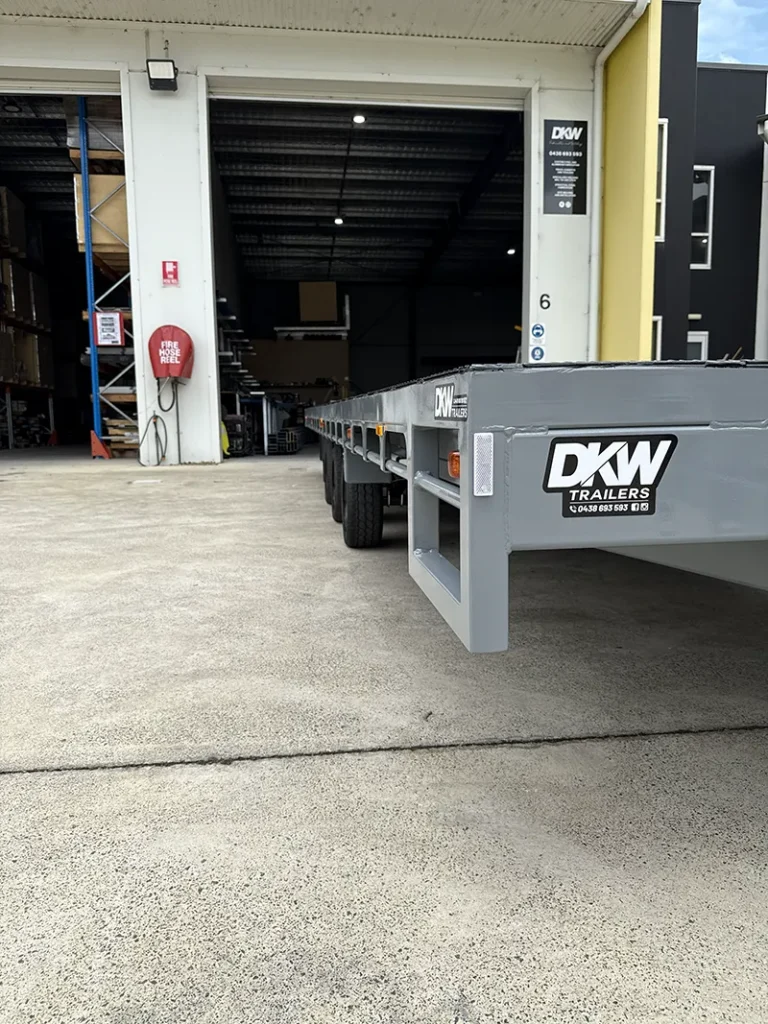
DKW Trailers has been building custom built trailers on the Central Coast for over 15 years. Dale and the team work with tradies, builders and commercial operators every week, and they understand the kind of demands a working trailer faces.
Every build starts with a conversation about what the trailer needs to do. From there, the team handles the design, material selection, fabrication and finishing, all from the fully equipped Wyong workshop. The result is a trailer that’s built specifically for the client, not pulled from a production line and hoped for the best.
With a family background in trailer fabrication stretching across multiple businesses in NSW, the depth of knowledge behind every DKW build is something most competitors simply can’t match.
Ready to Go Custom?
If you’re tired of making do with a trailer that doesn’t quite fit, or you’re buying your first trailer and want to get it right from the start, talk to the DKW team. Dale can walk you through your options, help you lock in the right spec, and provide a straightforward quote.
No pushy sales pitch. Just honest advice from a fabricator who builds trailers for a living.